When you think of wool, do you automatically think cruel and unsustainable? We have been doing some research into whether or not our first assumptions around this ‘luxury’ fabric are valid. Or is wool actually an incredible sustainable and natural fabric that we should all consider adding to our wardrobes?
Yes, wool is considered a luxury fabric, but do the host of benefits it offers (mostly unknown to the average consumer) outlay any environmental impact created by its production and disposal? And is it more or less sustainable than other fabrics we use daily?
The Woolmark Company says wool is the ‘original eco fibre’.
Why use wool?
I won’t go into depth on this, as I am aiming to write a blog dedicated to the benefits of wool, however across the world wool is used as a material for both bedding and clothing. It is considered to have health benefits as well as being luxurious and offering enhanced comfort.
According to The Wool Room, wool has been proven to improve your sleep by a staggering 25%. It has temperature regulating properties, is natural, breathable, and absorbent. It is also hypoallergenic, so perfect if you are looking for anti-allergy material.
So, do all these benefits come at an environmental cost?
Production of wool
Often shorn from sheep annually, wool is considered renewable, unlike most synthetic fabrics made from petrochemicals or plastics.
According to the British Blanket Company, on average, wool fabrics use 18% less energy than polyester, and almost 70% less water than cotton to produce as many as 100 garments. Wool is therefore considered to be one of the most environmentally friendly fabrics around.
When we think about producing wool clothing, many of us automatically jump to the assumption that it is cruel, and animal welfare is a big concern when it comes to sustainability. Yes, there may be some companies out there that do not produce wool ethically, but if you do your research, you can find companies that work with suppliers who are ethical and sustainable. The Wool Room is a prime example, as they care deeply about the welfare of all animals and only purchase from partners who adhere to the ‘5 freedoms’ outlined in the Animal Welfare Act 2006. You can find out more here.
When we think about producing wool clothing, many of us automatically jump to the assumption that it is cruel, and animal welfare is a big concern when it comes to sustainability. Yes, there may be some companies out there that do not produce wool ethically, but if you do your research, you can find companies that work with suppliers who are ethical and sustainable. The Wool Room is a prime example, as they care deeply about the welfare of all animals and only purchase from partners who adhere to the ‘5 freedoms’ outlined in the Animal Welfare Act 2006. You can find out more here.
The Lifespan of Wool
Today, single use items are still very much a part of everyday life. Clothing
is different in that most clothes get good use, however, research carried out
by The Nielsen Company (2012) shows that the average life span of wool is 50% longer than cotton garments. This in turn means once the garment is no longer needed it is much more likely to be in a condition where it can sold and used by someone else, rather than be thrown away.
Wool also lasts longer as it doesn’t need to be washed as much as other fabrics, thanks to its moisture wicking and odour resisting properties. This in turn reduces the carbon footprint of those who choose to wear wool, as it means less water and energy being used due to a reduction in the use of your washing machine.
What happens to wool post use?
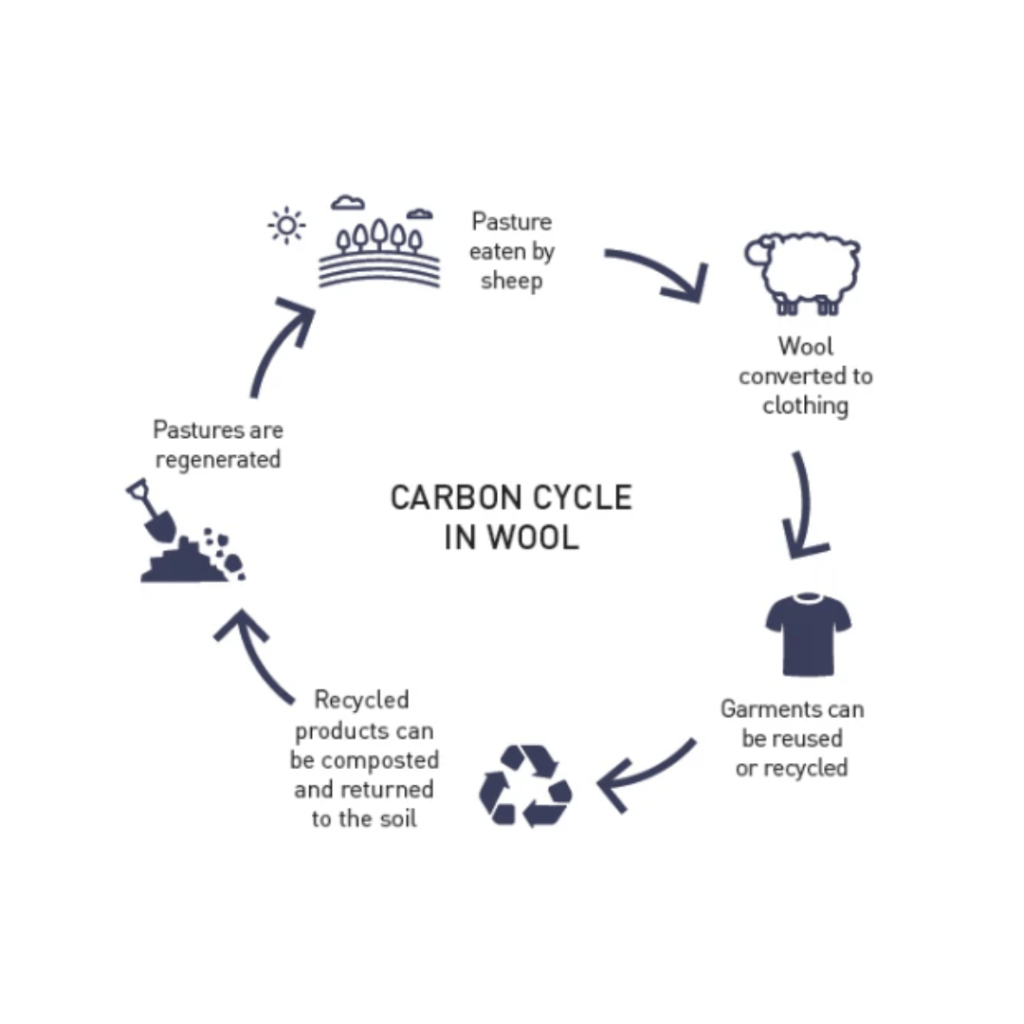
According to The Woolmark Company, wool is the most recycled apparel in the world. It is also 100% biodegradable so does not contribute to microplastic pollution in our oceans or on our land. At the end of their life, wool fibres release valuable nutrients back into the earth acting as a fertiliser for plants and crops.
Research into reducing carbon emissions
Producing wool requires rearing sheep, who produced methane. According to The Woolmark Company, in Australia, where more than 90% of the worlds fine apparel wool is produced, significant research is underway to better understand and mitigate methane. At the farm level, emissions can be offset by changing pasture species, improving soil management to increase carbon storage, and via tree planting.

 Your Eco Roots